The Problem
Modern web applications require high availability, but relying on a single, monolithic backend instance introduces a fatal single point of failure. If that server crashes due to an unhandled exception or becomes overwhelmed by a sudden traffic spike, the entire application goes offline immediately. While off-the-shelf reverse proxies like Nginx or HAProxy solve this, treating them as opaque black boxes prevents a deep understanding of core networking and distributed systems. I needed to understand exactly how traffic is managed at the transport layer without relying on external tools.
The Solution
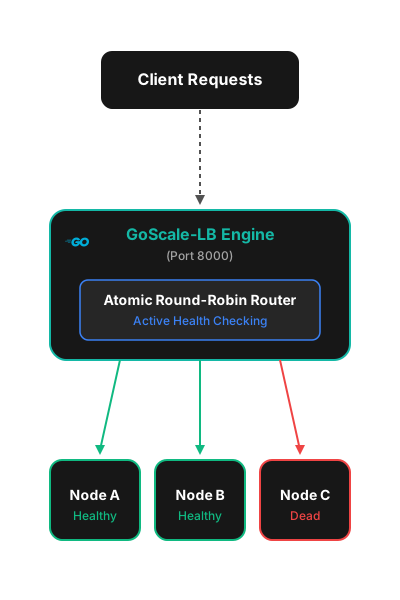
To guarantee high availability and master Go's native concurrency model, I engineered a highly performant Layer 7 Load Balancer entirely from scratch. • Dynamic Routing: Incoming HTTP traffic is seamlessly distributed across a predefined pool of backend nodes. • Active Health Checking: Background goroutines continuously ping servers, instantly sidelining any crashed node to ensure zero downtime. • Lock-Free Concurrency: Leverages Go's `sync/atomic` package for an atomic round-robin routing algorithm, securely managing thousands of concurrent requests without blocking mutex locks. This provides extreme transport-layer resilience without relying on opaque off-the-shelf tools like Nginx.